
This is the article where I give away part of my job, on purpose. Between sessions, or for some scars instead of them, a few minutes of daily self-massage is one of the most useful things you can do for a scar. So here is the exact routine I teach in clinic, in plain steps you can follow at home this week.
Why hand it over for free? Partly trust: I’d rather you knew what good care looks like than felt you had to buy it. And partly because it’s simply true that little and often is genuinely how tissue responds best. Two or three minutes a day beats twenty minutes once a month, every time.
Before you start: is your scar ready?
Only work on a scar that is fully healed: completely closed, with no scabbing, weeping or open areas. After surgery, that’s usually from around six to eight weeks, and after a C-section, once your postnatal check-up has confirmed things are healing well. If you’re in any doubt at all, ask your doctor or midwife first. That question outranks anything I say here.
The pressure rule
Move the skin. Don’t press into the muscle. It must never hurt.
Keep that sentence in your head the whole time. You are working the skin and the soft layers just beneath it, not pushing down into the body. If it hurts, you’re doing too much. Ease off. Warm, clean hands, and a little unscented oil or lotion if the skin is dry, and you’re set.
Technique 1: sweeps around the scar
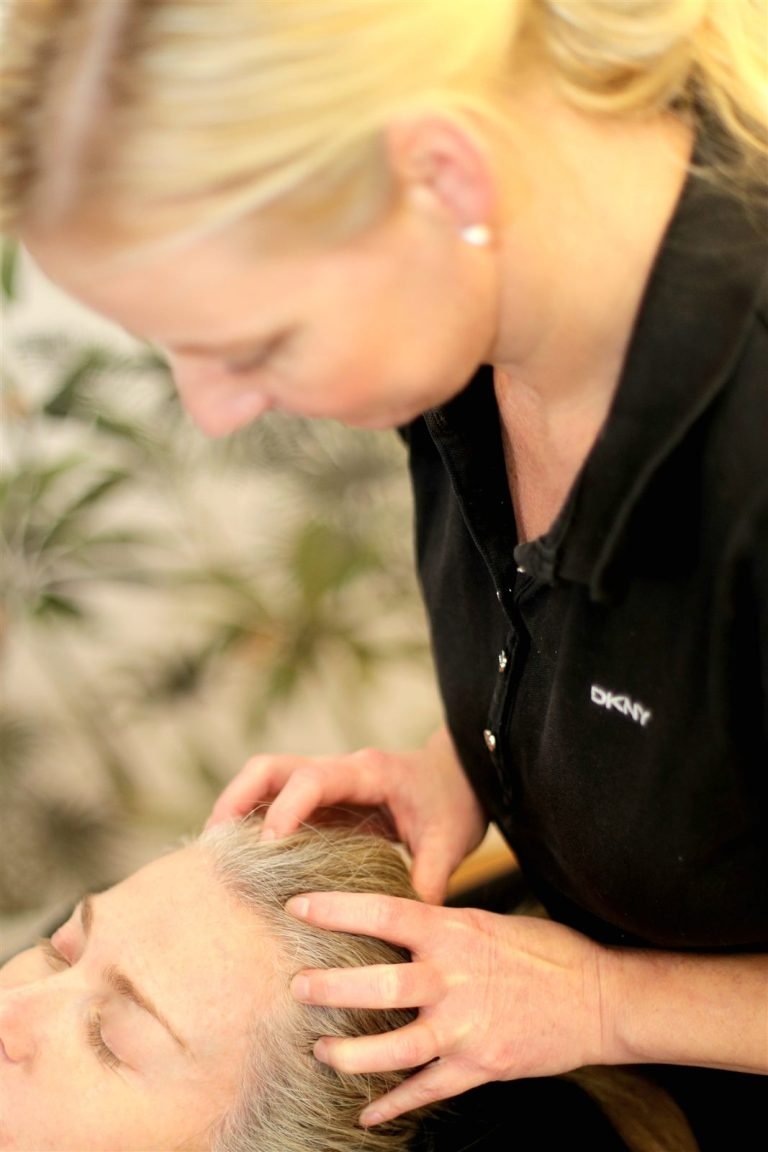
With flat fingers, make slow, light sweeps in the healthy tissue around the scar, not on the line itself to begin with. Think of gently waking up the whole area. Go up and down, then side to side, for maybe thirty seconds to a minute. This is your warm-up and, for a numb or hypersensitive scar, often the most valuable part.
Technique 2: small circles along the line
Now, with one or two fingertips, make small circles right along the scar itself, moving slowly from one end to the other. You’re gently moving the skin over the layers underneath, not grinding into it. If you meet a spot that feels tight or stuck, pause there and make a few soft circles, never forcing, just inviting it to soften.
Technique 3: gentle skin-lifting beside it
Beside the scar, pick up a small fold of skin between finger and thumb and lift it gently away from the body, then let it settle. Move along the length of the scar, lifting and releasing. This encourages the layers to glide again. Some scars won’t lift much at first. That’s fine, and it often improves with time. Never lift to the point of pain.
How often, how long
Aim for two to three minutes, most days. The habit matters more than the duration, so anchor it to something you already do. After your evening shower is perfect, when skin is warm and clean and you’re not rushing. A small daily rhythm will always beat an occasional marathon.
Stop signs
Stop, and ask your doctor or midwife, if you notice any of these:
- pain during or after (a little tugging is fine; pain is not);
- redness that lasts rather than fades;
- any opening, weeping or broken skin;
- irritation that grows session to session instead of settling.
None of these mean you’ve done something terrible. They just mean pause and check. When in doubt, ask.
What home care can and can’t do
Done gently and regularly, self-massage can help the tissue around a scar feel more supple, ease tightness and pulling, and calm skin that’s over-sensitive. Many people find their scar comes to feel more like a normal part of them again.
What it can’t do: remove the scar, or guarantee how it will look. The line stays, and it should. And a scar that’s recently started changing on its own belongs with your doctor, not your own hands.
When a session is worth it
A specialist’s hands are worth your money when a scar feels genuinely stuck, when you’re nervous about touching it yourself, or when you’d simply like someone to show you exactly what to do for your particular scar. Often that’s the best of both: one session to learn the technique properly, then your own two or three minutes a day carrying it on.
Start small, start gently, and start this week if your scar’s ready. Your hands are more useful than you think. — Janni