
Around eleven to twelve thousand Danish women leave hospital with a new C-section scar every year. Most go home with a leaflet about the wound and almost nothing about the months that follow it. This is the timeline I wish someone handed you on the ward: week by week, in plain language, with honest limits.
One thing to hold onto before we start: the scar itself stays. What can change is how it moves and how it feels. And starting later is never a mistake. One year on, or five, is not too late.
The short version
- Leave the scar alone until it is fully healed. This is your midwife’s and doctor’s territory, not mine.
- From around six to eight weeks, once healing is complete and your postnatal check-up is done, gentle scar work can begin.
- Starting months or years later still works. There is no window that closes.
Weeks 0–2: healing, rest, and red flags
These first weeks belong entirely to wound care. Keep the area clean and dry as your midwife advised, rest as much as a newborn allows, and don’t touch the scar itself. This is not the time for massage of any kind.
It is the time to know your warning signs. Increasing redness, heat, swelling, a wound that opens or weeps, a bad smell, fever, or pain that climbs rather than settles: any of these means you call your midwife or doctor, not a massage clinic.
Weeks 2–6: closed but still young
By now the wound is usually closed, but the tissue underneath is still knitting together. You can begin to make friends with the area without working on the scar line itself: rest a warm hand nearby, let gentle clothing touch it, get used to the sensation again. Many women feel numbness or a strange, disconnected quality here. That’s normal, and it’s part of why desensitising touch around the scar helps later.
Two practical notes: protect the scar from the sun while it’s young, and if your midwife suggests silicone gel or sheets, follow their advice. That’s a medical recommendation, and it sits above anything I do.
From around 6–8 weeks: scar massage can begin
“Fully healed” means the wound is completely closed, with no scabbing, weeping or open areas, and your postnatal check-up has confirmed things are as they should be. That check-up matters. It’s the moment a professional confirms your body is ready. Once you’re there, gentle scar work is generally safe to start.
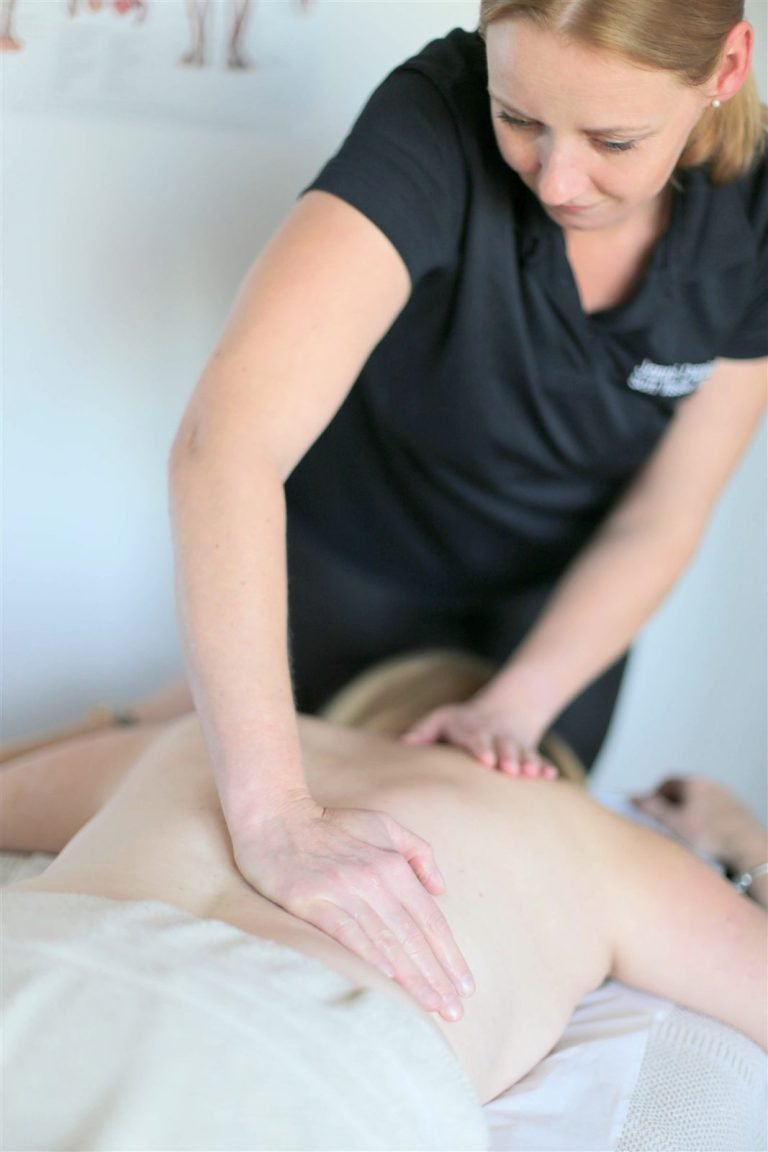
Gentle is the whole point. The work moves the skin and the layers beneath it; it never presses hard into a fresh scar. It can tug a little. It must never hurt.
Months 3–12: numbness, overhang, and pulling
This is where most questions land. A great many women describe the same handful of things:
- numbness or altered sensation along and below the line;
- a small shelf or overhang of skin above the scar;
- a pulling or tightness when they stand up straight or stretch.
Of these, the pulling and tightness tend to respond most to hands-on work, as the tissue around the scar becomes more supple and glides more freely. Sensation often settles too, over time. The overhang is more variable. Many women feel it soften, but I won’t promise a change in how it looks, because appearance is the one thing nobody can honestly guarantee.
One year and beyond
If your baby is walking and you’re only now reading this: you haven’t missed the boat. Scar tissue keeps responding for years. If anything, an older, settled scar is a straightforward and rewarding thing to work with.
When to see your doctor instead of me
Any sign the wound isn’t healing well, a scar that suddenly starts changing on its own, or pain that feels wrong: these go to your doctor first. Everything I do runs alongside your medical care, never instead of it.
What you can do at home
A few minutes of gentle self-massage a day, once you’re fully healed, is genuinely one of the most useful things you can do, and it costs nothing. A clinic session helps when a scar feels stuck, tender, or you’d simply like a specialist’s hands and a plan. Often it’s both: I show you the technique, you keep it going at home.
A few honest questions
Does massaging damage the scar? Not when it’s done gently and after full healing. The pressure stays light.
Can I start too early? Yes, which is exactly why we wait for full healing and your check-up. When in doubt, ask.
Does the overhang go away? Sometimes it softens; I can’t promise it disappears. Appearance is never guaranteed.
Can I do this myself? Absolutely, and I’ll teach you how.
Does it hurt? No. It can tug a little. It must never hurt, and you can say stop at any moment.
You waited long enough for the leaflet nobody gave you. Whenever you’re ready, whether that is six weeks or six years from now, the door’s open. — Janni